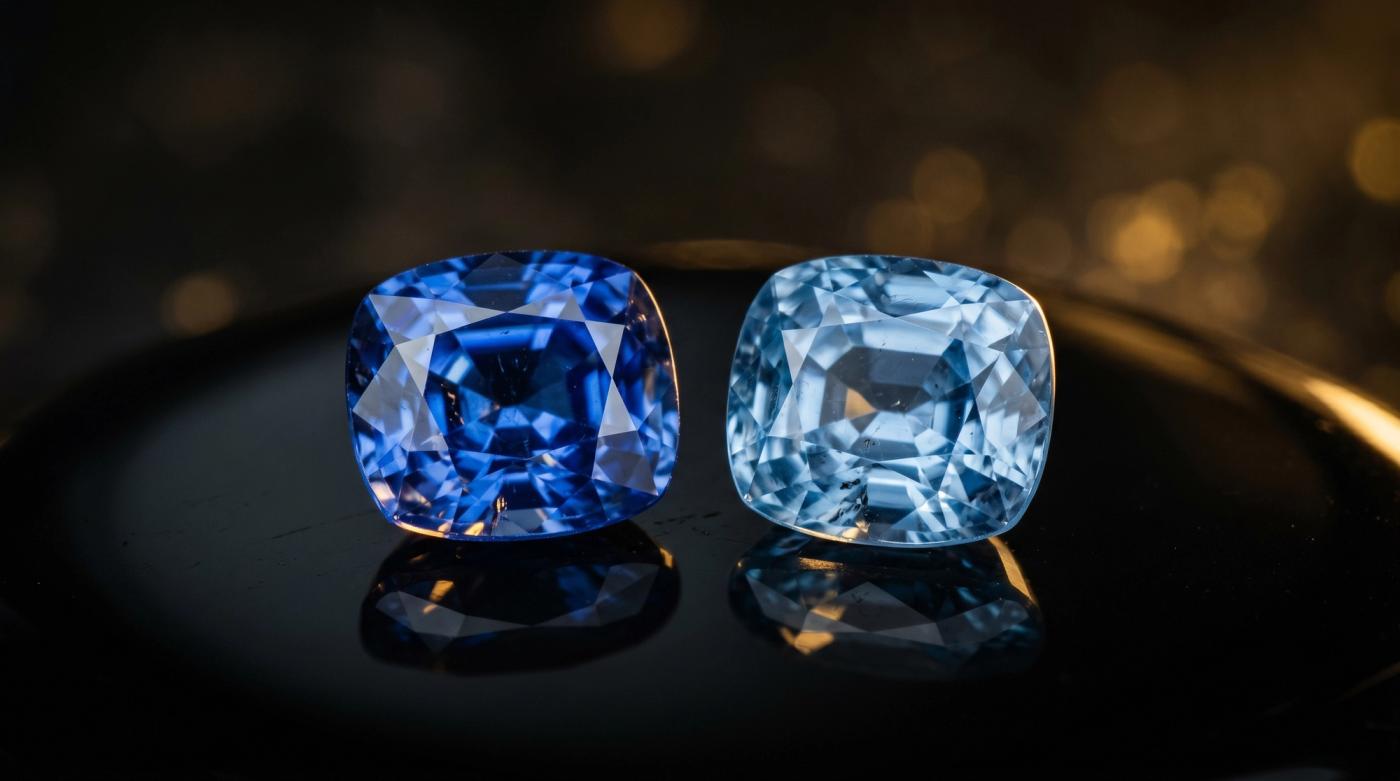
I buy rough at Ratnapura most weeks, and the first question I ask myself over a parcel of blue sapphire is never "is it pretty?" It's "will this go into the furnace, or is it good enough to sell as it is?" That single decision sits at the heart of the whole heated vs unheated sapphire debate, and it's the thing most buyers online never get to see.
So let me walk you through it the way I actually think about it on the ground, not the way a glossy retailer describes it.
What sapphire heat treatment actually is
Sapphire is corundum. The colour comes from trace elements locked inside the crystal, and the way that colour reads to your eye depends a lot on the internal structure of the stone. Heat treatment is simple in principle: you take the rough, bring it up to a very high temperature, hold it, and cool it in a controlled way.
What that does:
- Improves colour. A lot of Ceylon rough comes out of the ground pale, milky, or with a greyish, sleepy look. Heat can wake up the blue, deepen it, or clear a washed-out stone into something saleable.
- Clears silk. Sapphire often contains fine rutile needles ("silk") that make a stone look hazy. Heat can dissolve that silk so light passes through cleanly.
- It's stable and permanent. This is the important part. Standard heat doesn't fade, leak, or wear off. Once it's done, it's done.
Standard heat treatment has been part of the trade for a very long time. It is not a trick. It is not fake. A heated sapphire is still 100% natural sapphire — earth-mined corundum that's been put through a process the gem world has accepted as legitimate for generations. I label every stone I sell as heated or unheated, but I want to be clear from the start: heated is not the poor cousin. For most buyers it's the sensible choice.
Heat treated sapphire: before and after
If you've seen "heat treated sapphire before and after" photos online, the change can look dramatic, and honestly, sometimes it is. I've sent in pale, sleepy geuda-type rough that you'd walk past at the market, and it's come back a proper cornflower blue. (If you want to see both side by side, I label treatment status on every Ceylon sapphire in the store.)
What changes:
- A milky, semi-transparent stone becomes clean and transparent.
- A weak, greyish blue tightens into a saturated blue.
- Visible silk softens or disappears.
What doesn't change: it's the same crystal, the same chemistry, the same hardness. Heat doesn't add anything from outside. It rearranges what's already in there.
That's the line that matters, and it brings me to the treatments that are a problem.
Where it gets ugly: the treatments that aren't "just heat"
Not every "treatment" is honest standard heat, and this is what you actually need to protect yourself against.
- Beryllium (lattice) diffusion. Here, beryllium is introduced into the stone during heating so it changes the colour by diffusing throughout the crystal lattice — a process correctly called lattice diffusion. This is how a lot of bright orange, yellow, and padparadscha-looking stones are manufactured cheaply. It's a much heavier intervention, and it should always be disclosed and priced far lower.
- Glass / lead-glass filling. Heavily fractured, low-grade corundum gets the cracks filled with glass to make it look whole and transparent. These are cheap, fragile, and a world away from what most people picture when they hear "sapphire." A drop of the wrong household chemical can damage them.
- Flux-assisted healing. During high-heat treatment, a flux can be used that heals fractures inside the stone, leaving glassy residue in old cracks.
When someone in the trade says a stone is "heated," they usually mean standard heat with no added elements. The deceptive end of the market hides behind that same word. So when you ask how to tell if a sapphire is heat treated, the real question is usually which treatment — and that's a job for a lab, not a loupe.
How to tell if a sapphire is heat treated
Honestly? You mostly can't, not with certainty, not by eye. I've been doing this for years and I won't swear to "no heat" on a stone without a report. Here's what's actually going on:
- Inclusions give clues. Under magnification, a trained eye looks at the internal features. Natural, undisturbed rutile silk, unaltered crystal inclusions, and sharp internal features suggest no heat. Melted-looking silk, discoid fractures around inclusions, and glassy "snowball" haloes suggest heat.
- It takes a lab. Telling standard heat from no-heat — and certainly spotting beryllium diffusion — needs gear like FTIR and trace-element analysis. That's why this question lands on the desks of GIA, GRS, SSEF, Gübelin, and AGL.
If a seller tells you a stone is unheated but can't show you a report from a recognised lab, treat "unheated" as a hopeful guess, not a fact. Real unheated sapphire price per carat is high enough that the certificate pays for itself many times over.
What a "no heat" certificate actually confirms
A no-heat report from a serious lab tells you two things: the stone is natural sapphire, and the lab found no indications of heat treatment. The good labs also state origin — and for a Ceylon stone, "Sri Lanka, no indications of heating" is the line that drives the price.
It does not guarantee the stone is beautiful. I've seen certified unheated stones that I personally wouldn't have bought, because the colour was weak. The cert confirms the treatment status. Your eye still has to confirm the beauty.
Are unheated sapphires worth more?
Yes — and sometimes by a lot. But the reason is supply, not magic.
Here's the inside view. The large majority of Ceylon sapphire rough needs heat to look its best. Only a small fraction comes out of the illam already showing strong colour and clarity good enough to cut and sell with no treatment at all. When I'm sorting rough, the stones that are clearly going to be beautiful without the furnace are rare, and I set them aside immediately. Rarity is the whole story.
So an unheated stone with genuinely good colour is competing in a very thin pool of supply, and collectors pay for that. That's the heated vs unheated sapphire price gap in one sentence: you're not paying for better colour, you're paying for the rarity of getting that colour with no human help.
Does heating a sapphire reduce its value? And how much are heated sapphires worth?
Heating does not make a sapphire worthless — not even close. Most fine sapphires in the world's jewellery are heated. They hold value, they trade actively, and a beautiful heated Ceylon blue can still be an expensive, serious stone.
What's true is the heat treated sapphire value sits below an equivalent unheated stone of the same quality. The premium for "no heat" can be modest for commercial goods and very large at the top end, where unheated, fine-colour, certified Ceylon and Kashmir-type stones reach into serious money. For everyday buying, a top-grade heated stone often costs a fraction of its unheated twin while looking essentially identical face-up.
So are heated sapphires worth anything? Absolutely. The honest framing is: unheated commands a premium; heated is the mainstream, fairly-priced, perfectly legitimate market. The deceptive treatments — beryllium diffusion, glass filling — are the ones that genuinely tank value, and those should be cheap and clearly disclosed.
Heated vs unheated sapphire: which is actually better?
This is the real question buyers are circling, so let me answer it straight. There's no single "better." There's better for you.
Choose unheated if:
- You're a collector, or you care about the stone's untouched, natural state.
- You want maximum long-term value retention and a piece with provenance.
- You're buying at a level where a lab report is worth getting anyway.
- You accept paying a premium for rarity, not for visible difference.
Choose heated if:
- You want the best colour for your money.
- You're buying an engagement ring or a stone to wear and enjoy.
- You want a wide selection — far more fine heated stones exist than unheated.
- Stability matters to you (standard heat is permanent and worry-free).
The same logic applies across the trade — this is the broader difference between heated and unheated gemstones, not just sapphire. Ruby, the rest of the corundum family, even some other species: untreated rough that's beautiful on its own is rare, so it carries a premium, while treated material does the heavy lifting in the everyday market.
One thing I'd push back on: don't let anyone make you feel that a heated stone is "damaged goods." It isn't. It's a natural sapphire that's been finished with an accepted process, the same way I finish a rough stone on the polishing wheel. Both are human work on a natural object.
What I'd tell a friend
If a friend asked me what to buy, here's the short version:
- Decide what you're paying for. Beauty and durability? A great heated Ceylon sapphire is the smart buy. Rarity and provenance? Go unheated, and budget for it.
- For anything unheated, insist on a report from a recognised lab (GIA, GRS, SSEF, Gübelin, AGL). No report, no premium — full stop.
- Run from "treatment unknown" at a high price. And be alert to beryllium-diffused or glass-filled stones dressed up as fine sapphire.
- Judge the stone in your hand, not the label. I've turned down certified unheated stones for poor colour and happily bought stunning heated ones. The cert tells you the treatment; your eye tells you the beauty.
I sell both, and I tell every buyer exactly which is which. That's the only honest way to do it. Heated or unheated, what you want is a natural stone, accurately described, at a fair price — and once you understand what the heat actually does, the choice gets a lot easier.
Comments
Be the first to leave a comment.
Thanks — your comment is in and will appear once we've approved it.